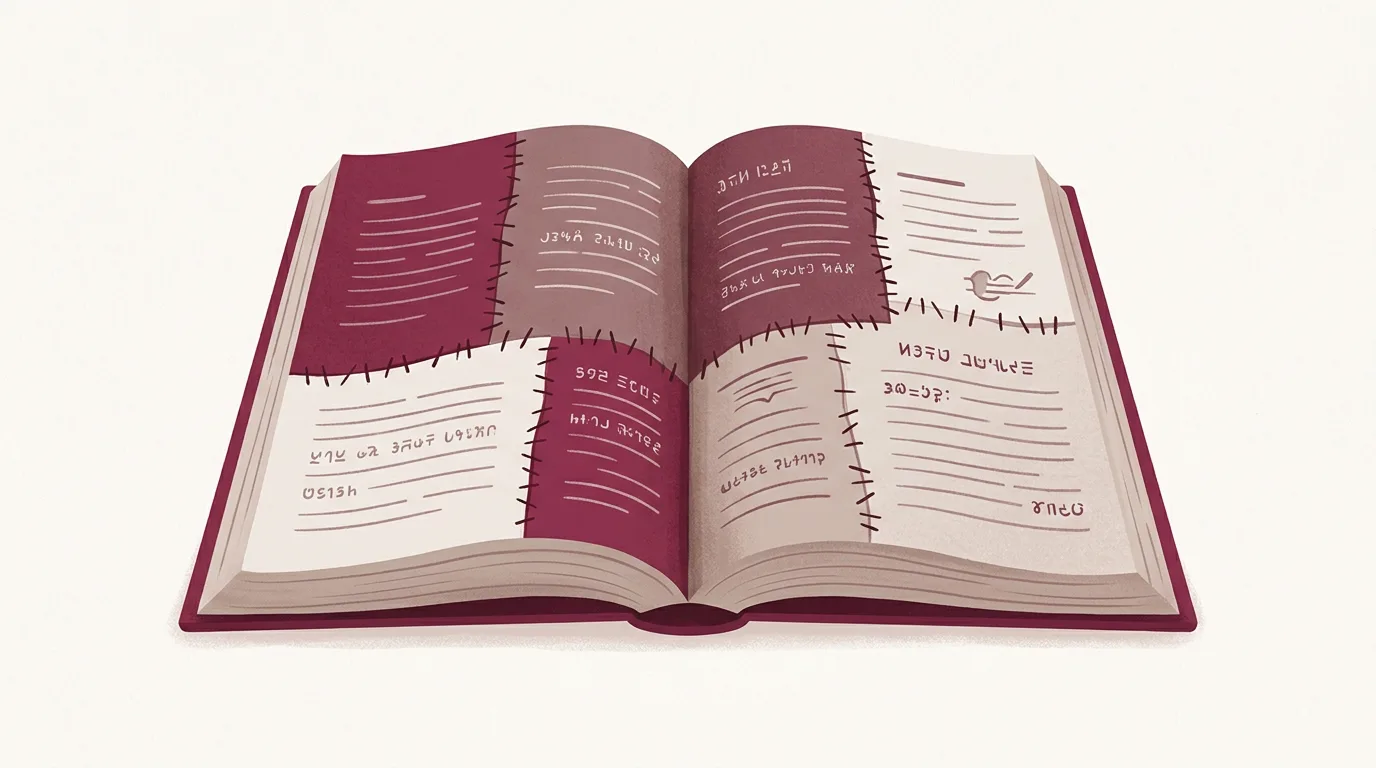
Translating a book with ChatGPT is technically possible. You paste in a section, get translated text back, and repeat until the manuscript is done. In practice, most authors abandon this route after a few days because the output suffers from tone drift, lost layout, and quality checks that do not hold up at book length.
This piece walks through what actually happens when you translate a full book with a general AI like ChatGPT, Claude, or Gemini. The failure modes are consistent, and specialized AI-book translation tools like translateabook.com are designed to address them. If you are considering ChatGPT for book translation, this is what you need to know.
No, not in a single pass. ChatGPT, Claude, and Gemini can translate text well in short stretches, but none of them can translate a 200 or 300-page manuscript in one shot. For anything longer than a few pages, you have to break the book into sections and translate them one by one.
The chunking is where the problems start.
If you are going to translate a book with ChatGPT, the process looks roughly like this:
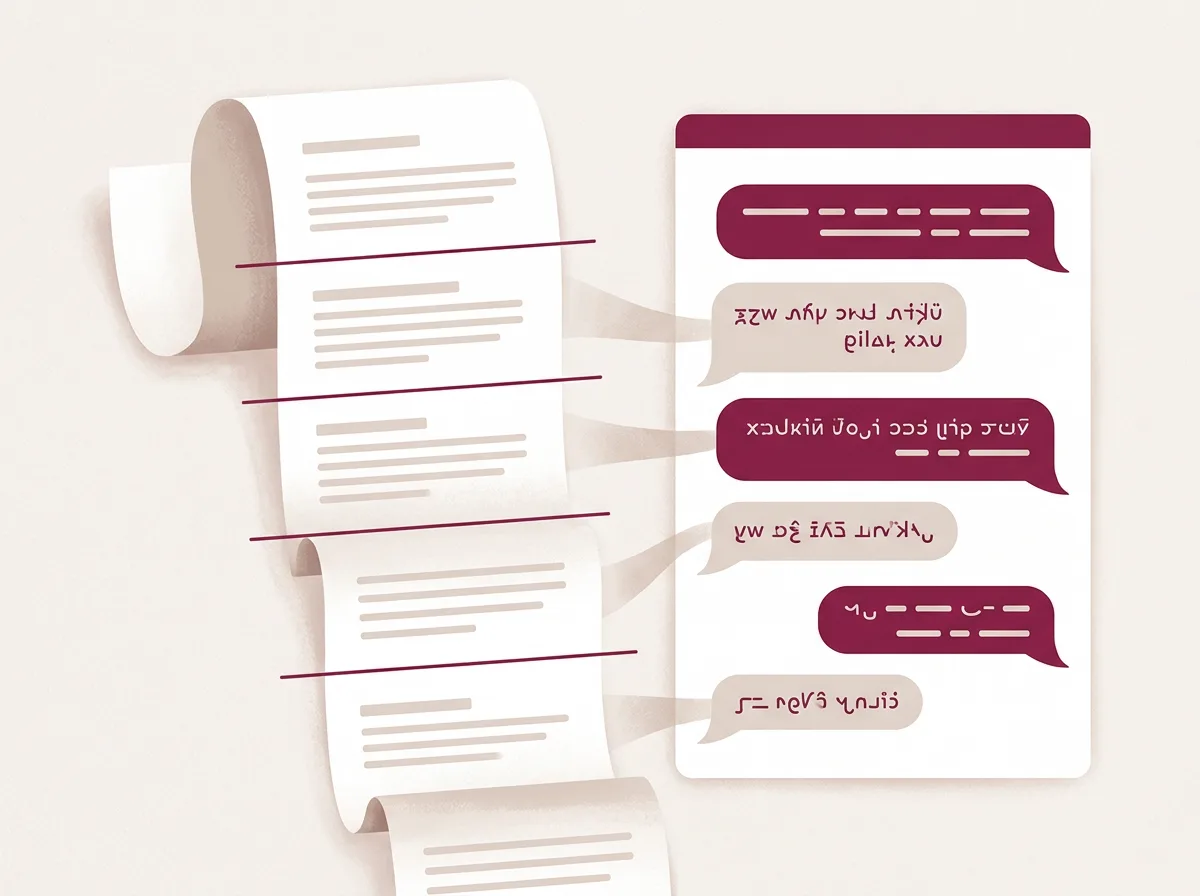
The translation step itself is fast. The reassembly and validation steps are where authors typically spend most of their time, and where the cracks in the workflow show up.
Tone drift is the failure mode that defines AI book translation in chunks. Because ChatGPT translates one section at a time without seeing the rest of the book, it loses context between chunks. The same character, the same narrator, the same register can come out differently in chapter two than in chapter twelve.
In practice, tone drift shows up as four distinct problems:
The assembled result reads, as one author who tried it put it, like "a Frankenstein-esque assemblage of different sections." Different paragraphs feel like they were translated by different people. For a novel, that breaks immersion. For non-fiction, it undermines authority. Either way, tone drift is the most common reason ChatGPT translations get shelved before publication.
Tone drift is the structural problem. There is also a set of routine mistakes that show up over the course of any book-length AI translation. Over hundreds of pages, all of these will happen at least once:
Authors who try ChatGPT first tend to arrive at purpose-built tools already knowing these limits. They ask up front whether the new tool will summarize, abbreviate, or hallucinate. That is how sharp the expectations have become.
Once you have a translated manuscript, the question is whether it is any good. With ChatGPT, the available quality check is to paste the result back in and ask for feedback.
This works on a paragraph. It does not work on a book. The feedback you get on a long manuscript is, in the words of authors who tried it, "pretty general and not so actionable." You end up with vague suggestions across hundreds of pages and no real way to know whether the translation is publishable. There is no per-sentence error report, no severity rating, no apply-corrections workflow.
That is the second reason authors give up on ChatGPT translation. Even if the output were stylistically consistent, you still have no confidence-building review at the end.
A purpose-built book translation tool like translateabook.com handles the same task differently. Rather than translating in blind chunks, it reads the whole book up front, locks in tone, characters, and terminology before any sentence is translated, and runs a separate review pass on the output.
| Step | ChatGPT (general AI) | translateabook.com |
|---|---|---|
| Input | Paste sections one at a time | One-click upload of the original file |
| Whole-book context | None, each chunk is isolated | Reads the full book before translating |
| Translation guide | None | Built from the whole book; user reviews and edits before translation starts |
| Translation pass | One-shot per chunk | Self-improving loop with a separate reviewer AI |
| Layout | Lost; rebuilt manually | Preserved in the original file format |
| Quality review | "Paste back and ask" | Per-sentence error report; accept, edit, or ignore each suggestion |
| User effort over the project | Multiple days of chunking, reassembly, and rework | One configuration step; the AI runs the rest |
Author Mode is the configuration that does the whole-book pre-read, the translation guide, and the self-improving translator-plus-reviewer loop. The translation guide step is the one that most directly fixes tone drift: characters, gender, register, terminology, and typography are agreed up front, then enforced across the whole translation.
This is not a marginal workflow improvement. It is the difference between a translation that reads as one voice and one that reads as a Frankenstein-esque assemblage.
The cost comparison is what brings most authors to ChatGPT in the first place. Here is the honest breakdown for a typical 200 to 300-page book:
| Route | Cash cost | Time cost | Output quality |
|---|---|---|---|
| ChatGPT or other general AI | ~$20/month subscription | Multiple days of hands-on work | Inconsistent at book length; layout lost |
| translateabook.com | $100 to $300 per book | Hours of AI work; minimal hands-on time | Consistent tone; layout preserved; reviewable error report |
| Traditional human translator | $7,000 to $15,000 | ~4 to 6 months end to end | Variable, can be very high with the right translator |
ChatGPT looks like the cheapest option on cash alone. The catch is the time cost, which is significant for any author actually working through a manuscript, and the output quality, which is usually not sustainable for publication. For a deeper look at the trade-offs of AI translation against hiring a human, see our comparison of AI book translation and traditional human translation.
ChatGPT can be the right tool for book translation in specific cases:
It is a poor choice when:
Several authors we have talked to that are now Translate a Book users tried Gemini or ChatGPT first and got a felt taste of the limitations. On described "three or four very frustrating days of trying to make the AI do what they want" before switching. One called the move to a purpose-built tool "a breath of fresh air." ChatGPT is not inherently wrong for translation, but it does stop scaling when reaching book length.
Not in one pass. ChatGPT can translate a 300-page book section by section, but you have to paste each section in manually, copy the output back into your manuscript file, and accept that tone, character names, and register may drift between sections. Most authors who try this route abandon it within a few days.
Because it translates each section without seeing the rest of the book. It does not remember how it translated a character's name in chapter one when you paste chapter twelve. It re-decides the formality and vocabulary level for each chunk. The result is tone drift across the manuscript.
No. ChatGPT returns plain text with at most simple formatting like headers and bold. The original layout, image positions, and styling are not preserved. You need to rebuild the file manually.
On paper, yes. ChatGPT is roughly $20 a month, while translateabook.com runs $100 to $300 per book. In practice, the time cost of ChatGPT, typically several days of hands-on work per book, plus the rework needed to fix drift, narrows the gap considerably.
Yes, occasionally. Over a book-length translation, expect at least a few cases of summarized sections, abbreviated passages, or inserted content that was not in the original. This is why you generally want a service that has built-in error correction, like translateabook.com self-improving loop and error report.
You can, but the polish step is closer to retranslating than to editing. Fixing tone drift across a whole book is significant work, and the underlying inconsistency is usually easier to prevent up front, with a translation guide built before translation starts, than to repair after the fact.
