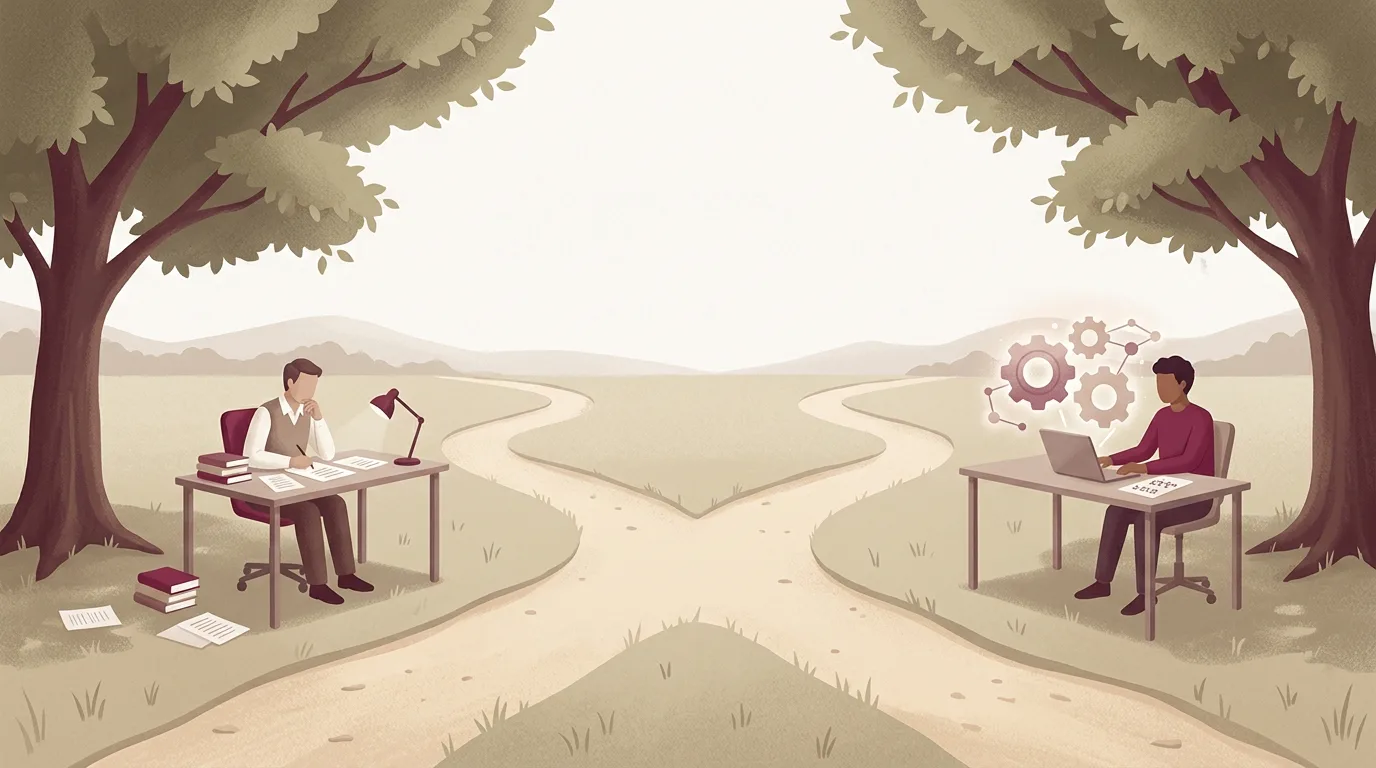
For most authors and small publishers in 2026, AI book translation through a service built for publishing (like translateabook.com) is faster and roughly 75 times cheaper than the traditional route, with quality close enough to publication-ready that a single native-speaker proofread is usually all that's left to do. The traditional route, working with a professional translator, still has a place: poetry, and prose where rhyme, wordplay, or formal style carry meaning. For everything else, the math has changed.
This guide walks through both routes step by step, with real cost and timeline numbers, so you can decide based on your book and your budget rather than on assumptions.
| Traditional Translation | translateabook.com | |
|---|---|---|
| Cost (200–300 page book) | $7,000 to $15,000 | Up to a few hundred dollars |
| Timeline (end to end) | A few months to half a year | A day to a week |
| Layout preserved? | No, you rebuild it | Yes, the original layout is preserved |
| Quality assurance | Thorough manual proofread | AI assisted proofreading + native-speaker light pass |
| Best fit | Poetry and stylistically demanding prose | Most authors and publishers |
Each row of that table reflects what customers actually report, not theoretical pricing or marketing benchmarks. The detail behind each row is below.
Working with a professional translator looks like this in practice:
Find a translator. Quality varies widely. Recommendations and past reviews help, but every author still has to commit to one person before they really know how that person works. Switching cost is high, since you have already paid for partial work and invested time bringing them up to speed.
Brief and onboard them. Walk them through the book, the goals, the audience, and any vocabulary or stylistic decisions you want preserved.
Translate, with regular communication. This usually takes weeks to months. Progress and quality checks happen back and forth.
Proofread. A separate person reads the result and catches what the translator missed. (This is a good idea for any translation, AI or human, because both can make mistakes, often in different places.)
Redo the layout. The translator typically works in a different file format than your original, so the layout is rebuilt from scratch. For complex books with formatted print layouts, this step alone can take roughly half the time of the entire translation.
Publish. Self-publish or work with a publisher, then marketing.
Two real customer experiences put numbers on the friction. A small publisher we work with tried to recruit translators through Babelcube, wrote to several people, and "really struggled just getting a reply." A different customer reported that translating a previous book traditionally took them four months, and they were "really frustrated with the way the communication happened with their translator during the process," spending real energy on chasing replies and explaining delays.
When you find a really good translator, the quality at the end is genuinely high. The trade-off is what it costs to get there.
The same book, run through translateabook.com, follows a different shape:
Upload your file in the format you wrote it in, already laid out.
Get an instant quote. The system analyzes the file and returns a price immediately.
Configure. Pick your target languages. Optionally provide custom instructions, or reference text whose style you want the translation to match. (This can be a previously translated portion of the same book, or any target-language text whose voice you like.)
AI in Author Mode reads the entire book and builds a translation guide. This guide covers tone, character relationships and gender, key terminology that must stay consistent, typography conventions, target audience, and more. It takes about thirty minutes. You get an email link when it is ready.
Review and edit the guide. A dedicated interface lets you add, remove, and correct anything. Translation does not start until you validate the guide. One customer told us the guide quality, especially the character descriptions, was "way better" than what they got from their beta readers asking the same questions.
AI translates the full book. This takes a few hours in Author Mode. Internally, a self-improving loop runs: a translator AI does the work, a reviewer AI grades the output across multiple dimensions, and feedback cycles continue until the result meets the quality bar.
The file is rebuilt from your original. The layout is preserved. This eliminates the costly redo-layout step entirely, which (as noted above) can be half the work in the traditional route.
Download and proofread via the dashboard. Convert to other formats if needed. The AI proofreading tool gives you general feedback across grammar, fluency, typography, and overall feel compared to a polished human translation, plus a detailed error report. Each potential issue comes with a suggested correction and the reasoning. Step through the report in the UI (validate, edit, or ignore each suggestion), or export as PDF if you want to work offline or with a separate human reviewer. One click applies all accepted corrections.
Light native-speaker proofread. A native speaker does a final pass. The goal is for that pass to require minimum edits.
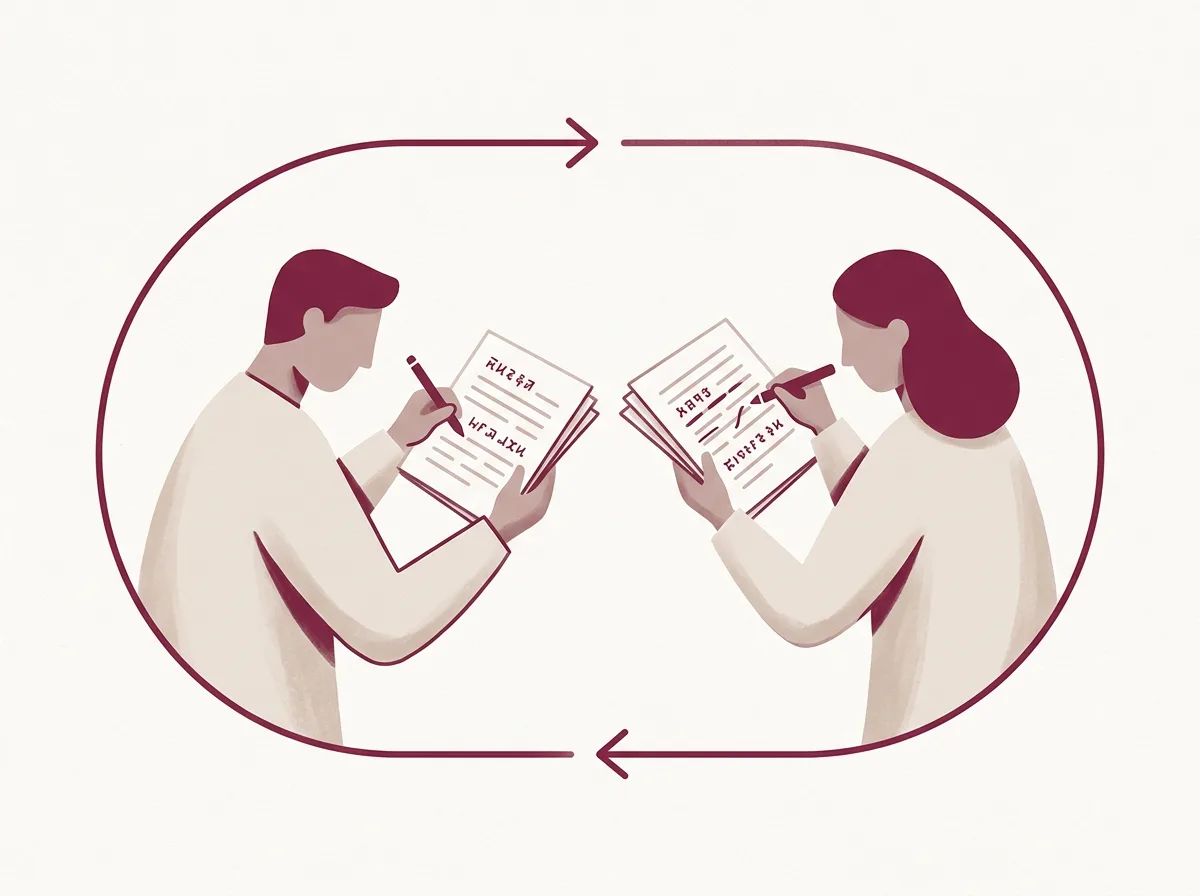
The same back-and-forth that takes days or weeks with a traditional translator (proofreader sends notes, translator responds, proofreader reviews) compresses to hours with this tool, and you can run multiple analysis passes on the same book if you want.
For a typical 200- to 300-page book:
The reduction is roughly 75 times. Cost is an important factor for authors and small publishers, alongside speed and ease of use. Together, these significantly lower the bar to publishing a translation, as many users have reported.
End to end, the traditional route runs about half a year for a 200- to 300-page book, and that does not include the time to find a translator in the first place. The customer who told us about the four-month translation was talking only about the translation phase.
translateabook.com produces the translated, laid-out file in a few hours. Reviewing the translation guide and running the AI proofreading tool stretches that to one or two days for most books. One publisher customer reports it takes them one week between uploading their 300-page book and actually publishing the translated version on Amazon, including all reviews and corrections.
That works out to roughly 60 times faster in real-world use, comparing four months to one week.
This is the question every serious author asks first, and the honest answer is: with a service built for book translation, quality is now close enough to publication-ready that the remaining gap is what a native-speaker proofreader closes in a single pass for many books. We don't claim the output is 100% publication-ready out of the box. We do claim it is good enough that a quick read-through is what stands between you and publishing.
Though non-fiction quality is particularly excellent through translateabook.com, fiction quality is really good - the AI often genuinely makes good, understandable stylistic choices. Some users reported only one or two edits needed across their entire book of 200+ pages following their human proofreading step; others report more, depending on the book and how much control over style they want. Though some users skip the native-speaker pass altogether and publish using only the AI proofreading and error-correction tools with good results, we still recommend a light native-speaker proofread as best practice.
A few things drive the quality:
Quality is not yet equal to a top-tier traditional translator working on poetry, or on prose where rhyme, wordplay, or formal constraints carry meaning. For everything else, the gap from publish-ready is small enough that the time and cost trade-off becomes the deciding factor.
Some books still benefit from a top human translator:
For everything else, including most non-fiction, literary and genre fiction, business books, self-help, technical writing, and children's books, translateabook.com gives you a faster, cheaper, close to publishable result.
Ask three questions about your specific book:
For most authors and publishers, the answer lands on translateabook.com for a strong first attempt, with the option to fall back to a traditional translator if the result really doesn't work for that specific book. The reverse choice (start traditional, switch to AI) is much more painful, because you have already spent the money and the months.
Traditional translation costs $7,000 to $15,000 for a 200-300 page book. AI book translation through a service built for publishing, like translateabook.com, costs up to a few hundred dollars for the same book, roughly 75 times less.
Traditional translation takes about four months to half a year end to end. AI book translation through translateabook.com produces a finished, laid-out file in a few hours, with full review and proofreading typically done within a week. One customer reported one week from upload to publishing on Amazon for a 300-page book.
Yes, for both fiction and non-fiction. Non-fiction quality is particularly excellent, and fiction quality is really good. We don't claim the output is 100% publication-ready, but it is close enough that a quick read-through by a native speaker is usually enough to close the gap. translateabook.com also includes comprehensive AI proofreading and error-correction tools to help with that final pass. Some users go further and publish using only those tools, without a separate native-speaker pass, though we still recommend a light native-speaker proofread as best practice. Some users report only one or two edits across an entire book. Poetry, and prose where rhyme, wordplay, or formal style carry meaning, may still benefit from a top traditional translator.
A service built for book publishing, like translateabook.com, rebuilds the translated file from your original, preserving the layout. Generic AI tools and traditional translators typically work in a different file format, leaving you to rebuild the layout, which can take roughly half the total project time for complex books.
For poetry, for prose where rhyme, wordplay, or formal constraints carry meaning, for highly specialized technical or cultural translation where you have a recognized domain-expert translator, and for ongoing series with an established translator whose voice readers expect. For most other books, the cost and time advantage of AI translation outweighs what a traditional translator adds.
